
Thank you for Subscribing to Retail Business Review Weekly Brief
Retail Business Review: Specials Magazine

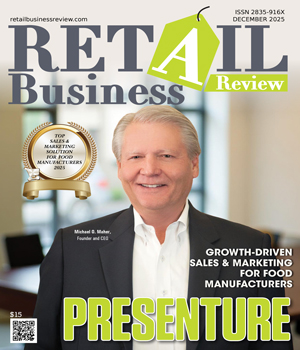
Presenture
Growth-Driven Sales & Marketing for Food Manufacturers
For food manufacturers, a stable and sustainable national sales and marketing solution is crucial for long-term success. Yet many face challenges when it comes to training and managing effective teams across diverse regions. Too often, fragmented broker networks and the cost of managing them stall progress. Presenture aces the sales game for these manufacturers, replacing outdated broker structures with a complete national sales and marketing solution. Since 1988, the company has built a proven model that drives measurable results while eliminating the burden of managing an in-house team. Presenture is one of the most economically prudent models available for food manufacturers. It provides a fully supported infrastructure. Inside and outside sales, marketing and administration teams support this infrastructure. These teams enable seamless operations and ensure compliance across all territories and product initiatives. By connecting brands directly to a trusted, high-performing broker network and key retailer relationships, Presenture ensures coordinated execution and scalable growth. “Our team of sales, marketing and support professionals builds and manages national broker networks on behalf of our clients, covering both retail and foodservice channels,” says Michael O. Maher, founder and CEO. Its methodology integrates three essential components—crafting the strategy, building the broker network and managing it with accountability. Every engagement starts with understanding a manufacturer’s goals to ensure the go-to-market strategy aligns with their operations, capacity and target markets. Once handled through multiple layers of managers, these tasks are now streamlined, enabling speed to market and a cohesive national presence. Custom Brokers, Faster Market Penetration for Retail Presenture’s retail network currently spans more than 30,000 stores. It has developed a strong presence in fresh and perishable categories, particularly along the perimeters of grocery stores, areas where daily execution, shelf movement and category knowledge are the difference between average and excellent results. Unlike traditional models, Presenture builds strategic broker networks customized to each client. Independent retail brokers are carefully chosen for their expertise in perishables, combined with strong retailer relationships and thorough operational knowledge. Brokers are assigned by account to avoid overlap and confusion, ensuring that responsibilities are clear and accountability is direct. Each broker is contracted directly with the manufacturer, providing full control and a safety net, a structure that prevents disruptions and protects investments.
Skincare Products Manufacturer
Spa De Soleil
Decades of Steady Partnership in Beauty and OTC Manufacturing
Rena Revivo, Founder and CEO
The beauty and personal care industry is constantly evolving. As consumers demand more and regulations grow stricter, brands are pushed to move faster than ever to stay relevant. In this shifting landscape, Spa De Soleil offers a steady hand. With over 35 years of experience as a family-owned contract manufacturer, the company combines regulatory expertise, reliable production, and a culture of care to help both emerging and established brands navigate the complexities of the market. The key is stability, and that’s what Spa De Soleil has consistently delivered. With the same ownership since inception, the company has built a reputation for tackling the market variables while transferring that knowledge to clients. Unlike manufacturers that expand and leave smaller players behind, it has maintained a commitment to helping young brands get a foothold while also meeting the needs of the established ones. “In an industry that’s ever changing, we remain committed to helping new brands get their foot through the door as well as supporting legacy players thrive,” says Rena Revivo, founder and CEO. That mindset is evident in the manufacturing process. Every project rests on three priorities: compliance, feasibility, and speed. The company operates under GMP standards, ensuring FDA and OTC compliance where required. It takes the client’s pricing under consideration to ensure the final product is profitable. Spa De Soleil also emphasizes efficiency, knowing that delays can hurt both revenue and market presence. Together, these priorities position Spa De Soleil as more than a manufacturer, establishing the company as a strategic partner dedicated to its clients’ growth and long-term success. This commitment is reflected in the breadth of its capabilities. Skincare, especially OTC lines such as sunscreens, acne, and eczema products, remains the core. However, it also manufactures bath and body care, personal care liquids, wipes, sheet masks, and bath bombs, among other categories. The company works with both private label and custom formulations, giving flexibility to entrepreneurs launching new lines as well as established brands expanding production capacity. Beyond its range of products or the scale of production, regulatory expertise is Spa De Soleil’s defining strength. An in-house team monitors changes in FDA, cosmetic, and wellness requirements across categories, supported by an FDA attorney who reviews labels and registrations. This infrastructure helps clients launch with confidence, eliminating costly surprises and reducing risk. The company’s expertise comes to life in real-world scenarios. When a fast-growing client producing an eczema treatment faced disruption after its previous manufacturer halted OTC production, the company stepped in. It reverse-engineered the formula, completed testing and FDA registration, and minimized downtime. Customers noticed no difference, allowing the client to maintain momentum and later expand the line with Spa De Soleil's support. Behind this ecosystem of support is a team whose longevity and specialization reinforce a culture of care. Many administrative staff have been with the company for over a decade, managing projects with close attention. R&D chemists balance technical skill and practical judgment, aligning client requests with stability and effectiveness. The regulatory group views compliance as a shield for brands and consumers, while the QA and QC teams apply decades of experience to ensure every unit meets high standards. From raw materials to finished goods, the team shares a conviction that every product must deliver excellence. This dedication shows how the right manufacturing partner delivers stability, scale, and service that empower brands. With nearly 35 years of family ownership, deep regulatory expertise, broad capabilities, and a dedicated team, Spa De Soleil has built a foundation of trust and reliability. For brands seeking both technical excellence and a partner who understands their growth ambitions, it provides the guidance and infrastructure for them to launch, expand, and succeed in today’s market.

Retail Pool Distribution Service
USPack
Redefining Retail Supply Chains with Smarter Routes
Ryan James Gumro, Vice President of Retail Distribution
With more than 30 years of experience in logistics, USPack has become a trusted partner for leading retail brands by rethinking how freight moves through the supply chain. Its model centers on commingled routing, where freight from multiple customers is consolidated into shared lanes, creating density that reduces costs and improves efficiency. Line hauls move freight from customer distribution centers into USPack’s own terminals, where loads are broken out, optimized, and dispatched to stores multiple times weekly. By controlling this entire process, from the middle to the final mile, the company delivers the efficiency, precision, and consistency that retailers rely on. The impact is measurable. The company consistently achieves 98 percent or better on-time delivery and scanning accuracy, even within tight delivery windows ranging from 15 minutes to two hours. Those narrow windows reduce store labor tied up waiting for freight, speed up the unloading process, and allow store teams to spend more time with customers than handling deliveries. “Delivering to the stores multiple days a week from multiple customers is what we are doing,” says Ryan James Gumro, vice president of Retail Distribution. That approach, he explains, is the core of running “the most efficient supply chain possible.” Technology Driving Reliability Technology underpins USPack’s performance. Driver movements are tracked through geofencing with an accuracy of about three feet, supported by GPS and real-time scanning that verifies when deliveries fall within required windows.
Top CPG Demand Planning and Supply Chain Optimization Solutions 2025
W.NDeen Advisory
Demand Planning Reimagined: Powering Growth Through Smarter Supply Chains
Walid N. Nasserdeen, Founder and CEO
A $5 million beauty brand was on the verge of a breakthrough. Demand was surging, retail doors were opening and momentum was building fast. But behind the scenes, production was collapsing under pressure. Operating make-to-order meant they could only produce after orders arrived and they simply couldn’t keep up. The obvious fix? Hire more staff and brace for higher costs. Instead, the company grew sales by 25 percent without adding a single employee. The difference wasn’t more people; it was better planning. By shifting from reactive order fulfillment to proactive inventory forecasting, the company eliminated overtime, cut expedited shipping costs and scaled into retail seamlessly. The transformation came from W.NDeen Advisory, a boutique consulting firm that specializes in bringing Fortune 500-level demand planning and supply chain strategy to high-growth consumer brands that can’t yet afford a full-time operations executive. Most businesses in the $5 to $50 million revenue range exist in what the Founder and CEO of W.NDeen Advisory, Walid N. Nasserdeen, calls ‘the forecasting dead zone.’ They’re too small to justify enterprise-level systems and dedicated supply chain teams, but too complex to wing it with basic spreadsheets and gut instinct. The result is stockouts that kill momentum, overstocks that drain cash and production chaos that stalls growth. “Big companies invest heavily in systems, data and people to get forecasting right,” says Nasserdeen, who spent 15 years developing demand planning expertise for major consumer goods and CPG brands. “Smaller businesses don’t have that advantage. They’re juggling growth and retail expansion while trying to plan inventory, production and fulfillment with a fraction of the resources.” W.NDeen Advisory fills that gap, not as traditional consultants who diagnose and disappear, but as a fractional operations partner embedded in the business. Every engagement begins with a 30- to 90-day operational audit that examines supply chain mechanics, inventory health and forecasting practices. But unlike most consulting projects that end with a PowerPoint, W.NDeen Advisory stays on board. The firm transitions into ongoing execution, managing forecasting, inventory and operational strategy on a retainer basis as an extension of the leadership team.

Retail Consulting

The Secret to Improving Your Customer Experience: Prioritizing the Front-Line Associate
Alex Tallman, Senior Director, Retail Experience, Fleet Feet
Retail Services

It's Time to Redefine Retail Entertainment Space
Jonathan Schwartz, VP of Real Estate and Business Development, IT’SUGAR
E-Commerce Marketing

Marketing For The New 'Digital Shelf'
Chip Schuman, Senior Vice President of Marketing, Consumer Products, Sargento Foods
E-Commerce Marketing

Gather all Information before Outsourcing Manufacturing
Francine Krenicki, SVP Global Innovation - Consumer Skincare - StriVectin, PanOxyl, Blue Lizard Sunscreen, Crown Laboratories
E-Commerce Marketing

The Importance of Leading Leaders
Acie McMillan, Regional Director of Operations, S&S Activewear

IN MY OPINION
E-Commerce Solution
From the Front Lines to Leading the Charge
Steven V. Hagen, Sr. Director of ECommerce, Store POS & Store Tech Product, Advance Auto Parts

LAST WORD
E-Commerce Marketing
Handshake Your Way to AI Excellence
Sean MacCarthy, VP of Analytics, Good Sam
IN FOCUS

Elevating Food Brands: The Power of Informed Sales and Marketing Solutions
Sales and marketing solutions for food manufacturers focus on data analytics, omnichannel strategies, and AI-driven optimization to drive growth.
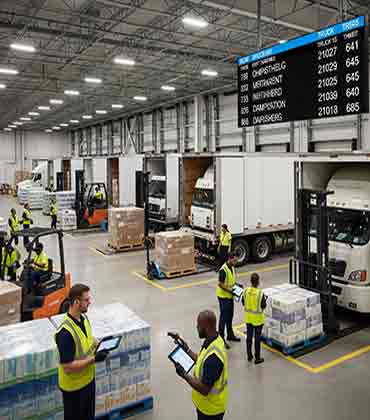
Optimizing Logistics Efficiency with Retail Pool Distribution Services
Retail pool distribution streamlines logistics and reduces costs by consolidating shipments and utilizing regional hubs.
EDITORIAL
Where Everyday Goods Learn to Move with Intelligence
What began as routine logistics with trucks on schedules, forecasts on spreadsheets and products flowing through familiar channels has quietly evolved into an intelligent web of signals, shared data and predictive engines that keep the consumer economy running in real time.
These advances are transforming not only how goods reach stores, but how trust in modern supply chains is being rebuilt.
A new generation of CPG systems is turning complexity into clarity. Retail pool distribution hubs now act as live coordination points, adjusting freight movements minute by minute based on demand patterns. Skincare manufacturers are shifting from fixed batch cycles to adaptive production runs shaped by actual consumer behavior, ingredient availability and marketing traction. Food brands are using AI-powered sales and marketing models that detect demand swings early, allowing promotions, pricing and distribution to move in sync rather than in silos.
Across warehouses, storefronts and factories, these technologies are proving their worth in ways consumers will never see but always feel. Shoppers notice fewer empty shelves. Retailers see tighter replenishment. Manufacturers gain stability in planning. And the system as a whole begins to operate less like a chain of handoffs and more like a single, connected system, one designed to work with intelligence.
Driven by these trends, the global retail industry is expected to reach USD 36.91 trillion by 2030, growing at a steady CAGR of 6.25 percent.
The magazine features a thought-provoking article by Steven V. Hagen, Sr. Director of ECommerce, Store POS & Store Tech Product at Advance Auto Parts, and Sean MacCarthy, VP of Analytics at Good Sam.
The publication also spotlights Presenture as its cover story for the way the company designs, builds and manages national broker networks that help food manufacturers move faster, cut costs, deepen account relationships and drive scalable growth across retail and foodservice.
We hope this edition offers insights that help supply chain leaders, CPG innovators and brand builders sharpen their planning, unify their operations and stay ready for what lies ahead in a world where consumer demand moves faster than the systems built to serve it.
