
Thank you for Subscribing to Retail Business Review Weekly Brief
Retail Business Review: Specials Magazine
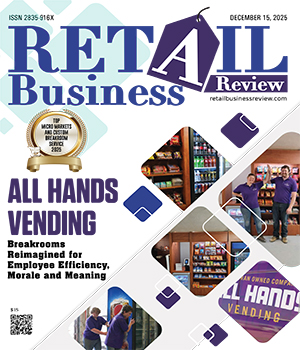
Whether it’s a mid-morning break at a logistics hub, a quick stop between rounds at a hospital or a late-shift snack at a factory, breakrooms all look pretty much the same. The vending corner, once meant to offer a quick recharge, now sits half-stocked, with snacks and canned drinks that lack appeal or nutrition. Those vital moments to reset are waiting to be reimagined. That gap between what companies offer and what employees truly value caught U.S. Navy Veteran Dan Willis’s attention. After years of serving in military intelligence and corporate finance, he observed the extent to which organizations invest in benefits that appear impressive on paper but fail to connect with employees. With his wife, Theresa Willis, he co-founded All Hands Vending to transform that corner into something more meaningful—a space that builds morale, efficiency and connection. Powered by AI and guided by human insight, All Hands Vending’s micro-markets give employees the feel of walking into a modern convenience store tailored to their tastes and dietary needs. Each installation is custom-built, complete with shelving, coolers and self-checkout kiosks custom-designed to fit any space. “The choices make all the difference,” explains Willis. “When employees find what they actually want, not just what’s left, the whole experience changes. Our AI tracks patterns, what runs out fastest, what’s ignored and what people come back for, so shelves are restocked before they ever go empty.” In a hospital setting, this might mean frozen meals and protein snacks that support long shifts, and in a warehouse, it might mean healthier grab-and-go food options for short breaks. All Hands Vending transforms the breakroom into a valuable business asset. It considers the breakroom more than a space where employees refuel. It’s where workplace culture renews itself.
Retail Exterior Signage Service
How do stores tell their stories? The magic lies in the seamless blend of branding elements—logo, colors, design, lighting, and the overall mood and atmosphere of the store—creating a compelling and immersive narrative. When these elements are harmoniously integrated with a well-defined, consistent theme, they craft a memorable experience that engages customers. This is what Stratus excels in. A leading brand implementation company with over 150 years of combined expertise, Stratus crafts and executes versatile brand stories for the nation’s largest and most recognized brands. “We are not just sign makers; we are storytellers. We bring our clients’ brand narratives to life through strategic execution,” says Ryan Goldberg, Chief Customer Officer at Stratus. The company stands out for its ability to integrate multiple services, manage large-scale rollouts, and handle every aspect of brand implementation while coordinating everything into a unified project. It is organized into four specialized divisions—interior graphics, lighting, exterior signage, and maintenance—each offering distinct products and services designed to capture and enhance the essence of every brand. These divisions work in close collaboration with customer success managers, who oversee the commercial side of the business and focus on customer experience. Acting as the clients' primary point of contact, the managers ensure that despite the variety of product offerings and divisions, the company presents a cohesive and unified approach. Clients benefit from this all-inclusive strategy as they receive a seamless, single-point solution for their entire brand buildout. This streamlined, client-centric approach has proven to be highly efficient in a market where cost and meeting project deadlines are critical. Clients are actively involved in the planning process and risk identification through effective communication and transparency, receiving constant updates on the project's status.

Retail 3pl Service
In the competitive world of logistics, success requires more than just reliable trucks and timely services. It demands a commitment to mission, culture, and a customer-centric approach that fosters long-term partnerships. Expak Logistics emphasizes these core values in its mission, ensuring every step of the logistics process adds value to its clients' operations.
While many companies focus solely on profitability, Expak places importance on its mission to empower their team to bring unparalleled value to its clients. This approach is evident in their hiring practices, where they seek individuals who are not only skilled but also aligned with the company's values. This alignment fosters a team dedicated to executing every logistics challenge in a timely manner and delivering services that guarantee client satisfaction.
“The reason we are successful and the reason we execute is because we have a team that's aligned with this mission,” explains Michael Kraus, CEO.
Solving Logistics Challenges with Logic
Expak is a premier small parcel expert offering B2B distribution, warehousing, and fulfillment services. Its expansive fleet and facilities cover the entire continental U.S., including Alaska. But, it’s Expak’s approach to logistics that makes them unique: It’s rooted in understanding each client's unique needs. They don't just move goods; they optimize supply chains.
 “When we talk to a client, we try to really understand what's going on with them,” says Kraus. “What are they trying to achieve? What's not working? And to see how we can bring value.”
This proactive approach helps identify issues and craft operational workflows and supply chain strategies. With meticulous planning, standard operating procedures (SOPs) are tailored and implemented for each client. For instance, drivers are provided with a one-page SOP that includes detailed pictures and delivery instructions, ensuring consistency and efficiency.
Moreover, Kraus emphasizes proactive communication. If something deviates from the SOP, drivers are encouraged to call in, allowing for immediate resolution. This reduces the risk of repeated mistakes and enhances overall client satisfaction. By reviewing data on delivery performance, they can identify patterns and make necessary adjustments, ensuring continuous improvement.
One of the significant challenges in logistics is maintaining consistency. Expak works with many major national and regional organizations, entailing meticulous sorting and last-mile freight delivery to locations nationwide. It also offers warehousing and fulfillment services to small and mid-sized businesses supplying goods to major retailers. All these clients expect deliveries within specific windows, and any deviation can disrupt their operations.
“When we talk to a client, we try to really understand what's going on with them,” says Kraus. “What are they trying to achieve? What's not working? And to see how we can bring value.”
This proactive approach helps identify issues and craft operational workflows and supply chain strategies. With meticulous planning, standard operating procedures (SOPs) are tailored and implemented for each client. For instance, drivers are provided with a one-page SOP that includes detailed pictures and delivery instructions, ensuring consistency and efficiency.
Moreover, Kraus emphasizes proactive communication. If something deviates from the SOP, drivers are encouraged to call in, allowing for immediate resolution. This reduces the risk of repeated mistakes and enhances overall client satisfaction. By reviewing data on delivery performance, they can identify patterns and make necessary adjustments, ensuring continuous improvement.
One of the significant challenges in logistics is maintaining consistency. Expak works with many major national and regional organizations, entailing meticulous sorting and last-mile freight delivery to locations nationwide. It also offers warehousing and fulfillment services to small and mid-sized businesses supplying goods to major retailers. All these clients expect deliveries within specific windows, and any deviation can disrupt their operations.
CXO INSIGHTS

Enhancing POS Experience for Employee and Customer is the Key to Success
Christopher Davis, Chief Information Officer, The Tile Shop[NASDAQ: TTSH]

Choosing Profitable Brick-and-Mortar Locations
Joe Apolloni, Senior Vice President Retail Operations and Duane Boris, Senior Director of Real Estate, Northern Tool + Equipment
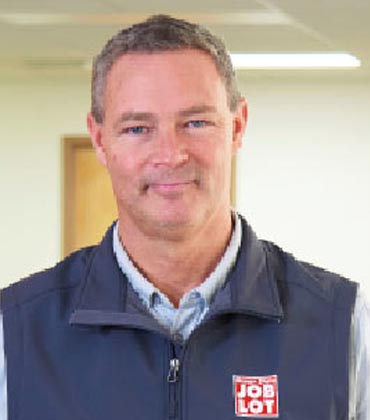
From Risk Management to People-First Culture Transformation
Bob Selle, Vice President, Head of People and Risk, Ocean State Job Lot

Leadership and Emotions
Kylie Livingston, Vice President of Human Resources and Talent and Organization Development, Rally House

From Regulations to Relationships: Elevating Quality in the Supplement Industry
Ted Beyer, Director of Technical Services & Quality, Customer Experience Oversight, First Day


IN FOCUS

Reinventing Retail Workspaces: Micro Markets and Custom Breakroom Services
Micro markets and tailored breakroom services boost employee satisfaction, workplace productivity, and on-site retail revenue by combining fresh offerings, automation, and data-driven operations.

AI-Powered Automation Enhancing Ecommerce Growth and Experience
Technological innovations in ecommerce enhance personalization, automation, and efficiency, enabling businesses to deliver smarter, faster, and more engaging customer experiences.
EDITORIAL
Creating Better Workday Experiences
Workplace convenience is being redesigned for a 2025 workforce that expects consumer-grade experiences everywhere. Employers are rethinking how people access food, drinks and daily essentials, moving past legacy vending and generic breakroom setups toward smart, flexible ecosystems that respect how work actually happens.
Self-service retail hubs stocked with fresh snacks, ready-to-eat meals and curated essentials sit closer to where people work. Unattended checkout, real-time inventory intelligence and data-driven product rotations keep each location relevant to its own teams. Break areas are shifting from fluorescent utility rooms to micro cafés that encourage quick resets, casual conversations and short bursts of collaboration.
For employers, these micro retail formats offer sharper control over product quality, pricing and operational flow while signaling that everyday employee experience matters. They want systems that flex with hybrid schedules and diverse workstyles, not programs that assume a 9-to-5, desk-bound norm.
That means matching assortments to time-of-day demand, using usage patterns to refine stock and treating food and refreshment as part of workplace design rather than an afterthought. Analysts project the global office refreshment service market will reach about $8.5 billion by 2035, with growth around 4.8 percent annually, a steady curve powered less by novelty snacks and more by employers turning everyday convenience into a strategic asset for engagement and retention.
This edition of Retail Business Review explores how companies are redefining workplace convenience through smarter retail environments and tailored breakroom experiences. It features a thought-provoking article by Nerrick Jackson, Director of Supply Chain Operations and Site Leader at Zappos Family of Companies and Laura Klopatek, Vice President, Corporate HR at H&R Block.
In this edition, highlighting the innovations shaping workplace retail in 2025, we hope you gain useful insights to strengthen engagement, improve daily experience and support a more people-centred workplace.
