
Thank you for Subscribing to Retail Business Review Weekly Brief
Retail Business Review: Specials Magazine
Smart Vending of Virginia
Cashless Vending With Owner-Led Service
In multifamily and workplace environments, vending is judged less by installation and more by uptime, product relevance, and response speed. Smart Vending of Virginia was built as a locally owned operation to meet that expectation through modern, cashless vending supported by hands-on service and direct accountability. Serving communities from Williamsburg to Virginia Beach across the Hampton Roads region, the company operates as a responsive alternative to national providers, with owners personally involved in day-to-day client relationships. Unlike fixed-route vending models that rely on scheduled visits, Smart Vending of Virginia, founded by Michael Carpenter and his son Matthew, uses real-time inventory visibility to determine when machines are serviced, updated and restocked. If an issue arises, clients reach the owners directly instead of being routed through distant teams, ensuring service decisions reflect on-site realities. “We are part of the community. We do face-to-face check-ins ourselves, faithfully service the machines, and make sure clients receive the vending they expect,” Carpenter explains. This demand-led operating system maintains consistent product availability while reducing unnecessary site visits. Machines are monitored remotely, so when restocking occurs, the team already knows what needs adjustment. Downtime is minimized, guesswork is eliminated, and actions are driven by usage data rather than fixed schedules.
Natural Food Broker
Burst Management
A Family-Run Business for Emerging Brands
Mike Robinson, President and CEO, Taylor Romatoski, CFO and Rachel Parsons, COO
Great ideas are born out of a need to address significant gaps. Mike Robinson felt there was a missing link after 40 years in the consumer-packaged goods (CPG) industry, working for national distributors and brokerages. The typical broker model was focused on the established top 20 percent manufacturers and wasn’t geared for brands poised for growth but not yet ‘large enough’ to be a priority. Burst Management was created specifically for these emerging brands. It ensured they got the best services the prominent brands received but with a familial touch. A company that helps them navigate working with large retailers and distributors, learn industry jargon and acronyms and consult them on what opportunities and deals to take, with proper communication. Its family-owned credential isn’t just about having a different kind of ownership but something that permeates how it operates. Burst Management prefers to work closely with a more manageable portfolio of clients. “Since our inception, we have stuck to a manageable portfolio, giving us the room to dedicate ourselves and give quality results to clients,” says Robinson, president and CEO of Burst Management. “Our account managers handle no more than 5–6 brands, ensuring daily progress and respectful persistence with retailers and distributors.” Another advantage of a smaller portfolio is having sound communication channels with them—a rarity in the space. Burst Management ensures good communication through a three-pronged approach, starting with a live Google document. Each live document is tailored to a single brand, containing the planned strategy and the list of retailer accounts to pursue, developed in tandem with the client. The document is regularly updated with the progress made, as well as a promotional tracker and a sample page. Burst Management substantiates this with regular phone calls and in-depth emails containing written reports, recapping the progress and updates. “Our clients need this kind of communication as they are budding CPG brands, mostly small startups that are new to the grocery industry,” says Taylor Romatoski, CFO.

Retail Consulting Provider

Crabtree Consulting
Transforming Jewelry Retail Businesses with Execution-Driven Solutions
Megan Crabtree, Founder and CEO
The jewelry retail industry is facing significant challenges. Business is down compared to past years, with declining foot traffic and reduced average ticket sizes. Retailers must navigate intense competition, operational inefficiencies, and shrinking margins. Many companies seek guidance from consulting firms, but larger firms often fall short. Their outsourced teams generate ideas but lack hands-on execution assistance, leaving businesses with theoretical strategies rather than practical solutions. Crabtree Consulting takes a different approach. As a boutique firm with an in-house team of experts, it ensures that strategy and execution go hand in hand. The company does not outsource key functions and works directly with clients, integrating seamlessly into their operations to deliver real, measurable results. From optimizing workflows to improving profitability, Crabtree Consulting helps jewelry retailers overcome obstacles and achieve sustainable growth. At the helm is Megan Crabtree, a leader with extensive experience in the jewelry industry. She began her career as a salesperson for a 10-store jewelry chain, where she gained firsthand insight into retail operations. Over time, she trained more than 1,500 independent jewelry retailers, deepening her understanding of how stores operate and the challenges they face. Her career progressed from retail sales to store management, then to vice president roles in both retail and manufacturing, where she worked with companies generating over $100 million in revenue. This full-circle experience gives her a unique advantage—most consultants have expertise in only one side of the business, while she has successfully navigated both. For jewelry businesses looking to grow, Crabtree Consulting isn’t just a consultant—it’s a catalyst for transformation. “At Crabtree, we embed ourselves in our clients’ businesses, ensuring that every strategy is not only planned but flawlessly executed to drive real results,” says Megan Crabtree, founder and CEO of Crabtree Consulting.
Retail Consulting

The Secret to Improving Your Customer Experience: Prioritizing the Front-Line Associate
Alex Tallman, Senior Director, Retail Experience, Fleet Feet
Retail Logistics

Implementing Cyber Security Strategies in Retail for Data-Driven Success
Arthur Phidd, Chief Information Officer, REEDS Jewelers
Cosmetics Manufacturing

The Future of Localization Using AI
Jackie Long, Director of Merchandising Technology Initiatives, Bealls Inc
Retail Logistics

Transforming Customer Experience Leveraging Technology
Wes Dudley, Senior Vice President, Customer Experience & Retail Operations, Broad River Retail
E-Commerce Marketing

The Importance of Leading Leaders
Acie McMillan, Regional Director of Operations, S&S Activewear
Retail Consulting

Major Challenges and Trends that has been Impacting CRM
Aaron Nielsen, Vice President of Information Technology, Mall of America
Retail Consulting

How Merchandising Strategy and Inventory Precision Drive Modern Retail Profitability
Lindy Deal, Head of Wholesale & Retail, Strauss America [NYSE: LEVI]

IN MY OPINION
Retail Consulting
Why Cybercriminals Keep Winning-and What Businesses Can Do
Mark Alvarado, Executive Director of IT Security & Compliance (CISO), Academy Sports + Outdoors [NASDAQ: ASO]

LAST WORD
E-Commerce
The Ecommerce Analytics Landscape: Wisdom in Three Quotes
Mathew Vermilyer, Sr. Director of eCommerce Analytics and Optimization, Home Group Inc
IN FOCUS

Growing Importance of Fashion Business Consultants in a Competitive Industry
Fashion business consultants help brands navigate market competition, enhance creativity, and improve profitability through strategic planning, digital transformation, and sustainable business practices.

Elevating Retail Strategy: Role of Fashion Business Consultants
Fashion business consultants bring specialized knowledge in trend forecasting, brand positioning, customer journey optimization, and merchandising strategy, all of which are critical for navigating modern fashion retail challenges.
EDITORIAL
Redefining Retail through Strategy and Intelligence
This edition of Retail Business Review examines how disciplined strategy, analytical rigor, and executive leadership are reshaping the fashion and retail ecosystem in 2026. As organizations confront evolving consumer expectations and mounting operational complexity, the ability to translate insight into execution has become a defining competitive advantage.
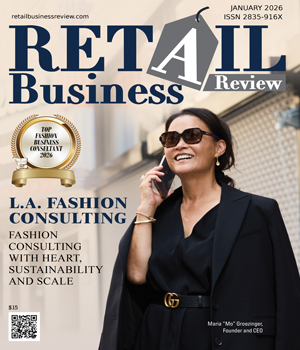
At the center of this issue is our cover story, L.A. Fashion Consulting, recognized as Top Fashion Business Consultant 2026. The firm exemplifies the consultative precision now required in fashion business leadership. By combining deep sector expertise with structured, insight-led methodologies, L.A. Fashion Consulting has helped brands sharpen operational alignment, strengthen merchandising strategies, and improve go-to-market effectiveness. Its work reflects a pragmatic understanding of fashion as both a creative and a commercial enterprise, one in which sustainable growth is driven by clarity, discipline, and informed decision-making. This balanced approach has positioned the firm as a trusted advisor to brands navigating scale, complexity, and market pressure.
This issue also features perspectives from industry leaders that underscore the operational foundations supporting modern retail. Mark Alvarado, Executive Director of IT Security & Compliance (CISO) at Academy Sports + Outdoors [NASDAQ: ASO], frames cybersecurity as a core business responsibility rather than a standalone technical function. His insights emphasize leadership accountability, organizational alignment, and proactive risk management as essential components of retail resilience. Complementing this viewpoint, Mathew Vermilyer, Senior Director of Analytics and Optimization at At Home and a United States Marine Corps veteran, offers a disciplined lens on analytics and performance. He highlights the importance of clear metrics, actionable insights, and execution-focused analytics in driving consistent business outcomes.
Collectively, the voices and organizations featured in this issue reflect a retail sector moving toward greater intentionality and operational maturity. As strategy, data, and leadership converge, the path forward belongs to those willing to lead with structure, insight, and purpose. We invite readers to engage deeply with these perspectives and explore how informed leadership is shaping the future of retail.
